


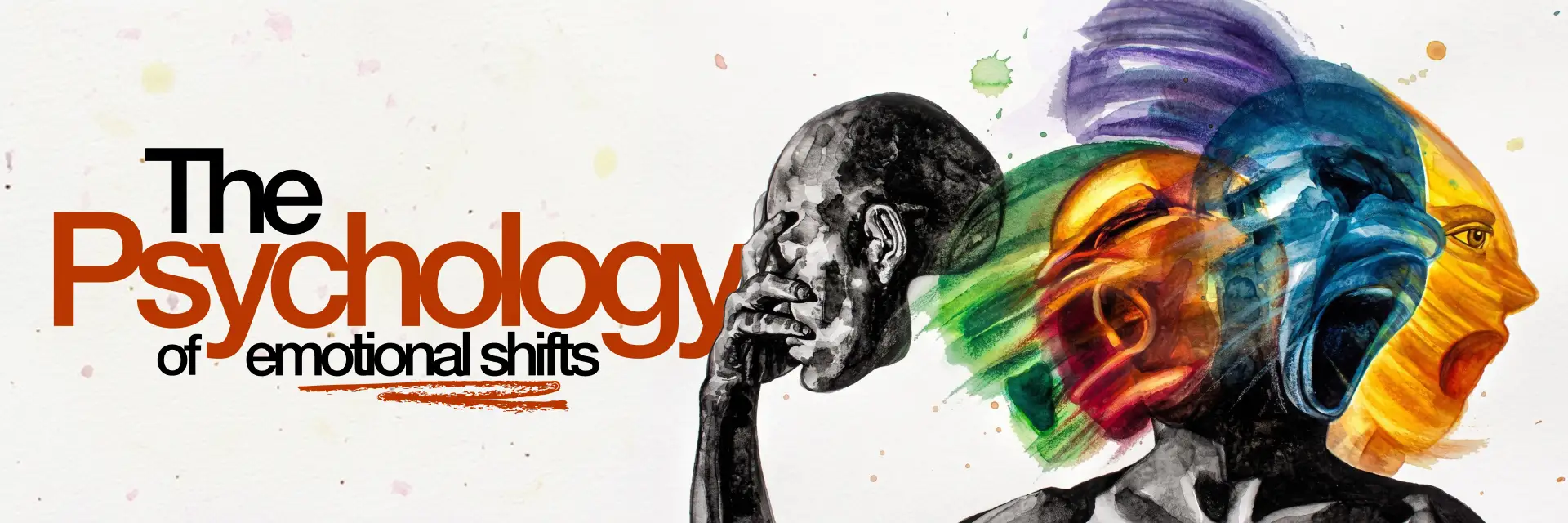
Have you ever wondered why your heart races before a big presentation, or why a simple smile can lift your entire mood? Emotions are part of almost every experience we have. They can influence the way we think, the decisions we make, the way we communicate, and even how we understand ourselves. Although emotions can sometimes feel sudden or unpredictable, they are not random. They are deeply rooted psychological responses that help us respond to the situations, people, and experiences around us.
In psychology, emotions are understood as complex states involving the body, mind, and behavior. When we experience an emotion, several things can happen at the same time. Our body may respond physically, our thoughts may change, and our behavior may be influenced by what we are feeling. For example, fear may make our heart beat faster and encourage us to move away from danger. Happiness may make us more open to communication and connection. Anger may increase our motivation to respond when we believe something is unfair.
Emotions therefore act as inner signals. They provide information about what is happening inside us and around us. They can guide how we think, decide, communicate, and connect with other people.
Why Do We Experience Emotions?
Emotions serve important purposes in everyday life. They can help us recognize threats, respond to challenges, understand relationships, and make sense of our experiences.
For instance, fear helps us detect danger, anger pushes us to confront unfairness, and love strengthens our bonds with family and friends. These emotions may feel very different from one another, but each can serve a purpose.
Fear can encourage us to be cautious when we face an unfamiliar or dangerous situation. Imagine walking alone and suddenly hearing a loud sound behind you. Your body may immediately become alert. Your heart may race, your attention may become sharper, and you may prepare to respond. This emotional reaction can help you notice possible danger.
Anger can also provide information. When someone treats us unfairly, crosses an important boundary, or harms someone we care about, anger may appear as a signal that something feels wrong. Anger itself does not automatically tell us what action to take, but it can draw our attention to an issue that needs to be addressed.
Love and affection have a different role. They help people form and maintain meaningful relationships. The connection we develop with parents, siblings, friends, partners, classmates, and other people can give us a sense of belonging and support.
Without emotions, life would be flat, and decision-making would lack direction. Even choices that appear completely logical are often connected to what we value, care about, fear, or hope for.
Emotions Affect the Way We Think
It is easy to think of emotions and thinking as two completely separate processes. In reality, they often work together.
Our emotional state can influence what we pay attention to, how we remember an experience, and how we interpret a situation. When we are excited, we may notice opportunities that we might otherwise overlook. When we are anxious, we may focus more strongly on possible problems or negative outcomes.
Consider a student preparing for an important examination. If the student feels confident and motivated, they may approach studying with greater concentration. However, if they become overwhelmed by anxiety, they may find it difficult to focus, even when they have prepared well.
This does not mean that emotions always control our thoughts. Rather, emotions can influence the mental environment in which thinking takes place.
They can affect memory, attention, creativity, and problem-solving. A positive emotional state may encourage flexible thinking and exploration, while intense negative emotions can sometimes narrow our attention toward the immediate problem.
Understanding this relationship is important because it reminds us that emotional well-being and effective thinking are not completely separate. Taking care of our emotional state can also support the way we learn, work, and solve problems.
We Experience More Emotions Than We Can Name
Surprisingly, while humans may experience hundreds of emotional blends, most of us can name only a few. We commonly use words such as happy, sad, angry, afraid, or excited. But our actual emotional experiences can be much more detailed.
For example, what we call sadness could actually involve disappointment, loneliness, grief, embarrassment, insecurity, or frustration. Similarly, what we describe as anger may sometimes be connected to hurt, fear, rejection, or feeling misunderstood.
Learning to identify these differences can improve emotional awareness.
Imagine someone receiving criticism from a teacher or manager. Their first reaction may be anger. But after taking some time to reflect, they may realize that the criticism actually made them feel embarrassed or insecure. Understanding the deeper emotion can help them respond more constructively.
This is why having a richer emotional vocabulary can be useful. When we can name what we are feeling more accurately, it becomes easier to understand what we need and decide how to respond.
Instead of simply saying, “I feel bad,” we might ask:
- Am I disappointed?
- Am I worried?
- Am I frustrated?
- Do I feel rejected?
- Am I overwhelmed?
- Am I embarrassed?
- Do I feel misunderstood?
These questions encourage us to look beneath the surface of an emotional reaction.
The Relationship Between Emotions and Behavior
Emotions do not only affect our thoughts. They can also influence our behavior.
When people feel angry, they may speak more harshly. When they feel afraid, they may avoid a situation. When they feel happy, they may become more social and willing to communicate. When they feel overwhelmed, they may withdraw from others.
However, experiencing an emotion does not mean that we have to act on it immediately.
This distinction is extremely important.
Feeling angry is different from choosing to hurt someone because we are angry. Feeling anxious is different from allowing anxiety to prevent us from doing something important. Feeling disappointed is different from treating another person badly because we are disappointed.
Emotional awareness gives us a moment between feeling and action.
That moment can make a significant difference. Instead of reacting automatically, we can pause, understand what is happening, and choose a response that better reflects our values.
When Emotions Become Difficult to Manage
Emotions are useful, but they can also become difficult when they remain intense for long periods or are not handled in healthy ways.
However, unmanaged emotions—like prolonged anger or anxiety—can damage health and relationships.
For example, someone who constantly holds on to anger may begin to interpret ordinary situations as personal attacks. A person experiencing persistent anxiety may repeatedly imagine negative outcomes and avoid situations that could actually help them grow.
Unmanaged emotions can also affect relationships. When people react without understanding what they feel, small disagreements can become major conflicts. A simple misunderstanding may turn into an argument because one person responds from anger instead of taking time to communicate clearly.
This does not mean that people should suppress difficult emotions.
Trying to eliminate anger, sadness, fear, or anxiety completely is neither realistic nor necessarily healthy. These emotions can carry valuable information. The goal is to understand them rather than allowing them to control every decision.
Biology and Culture Shape Our Emotional Lives
The psychology of emotions highlights that feelings are shaped by both biology and culture.
Some emotional responses have biological foundations. Human beings are capable of experiencing emotions that help them respond to challenges, build relationships, and protect themselves.
At the same time, culture can influence how emotions are expressed and understood.
Different families, communities, and societies may have different expectations about emotional expression. In some environments, openly expressing sadness may be accepted. In others, people may be encouraged to hide it. Some cultures may place strong value on emotional restraint, while others may encourage more expressive communication.
These cultural expectations can influence how people learn to deal with their emotions.
For example, a child who repeatedly hears that “being strong means never showing emotion” may eventually learn to hide sadness or fear rather than communicate it. Another person may grow up in an environment where talking openly about feelings is encouraged.
Neither example means that biology disappears. Instead, our emotional lives are influenced by an interaction between our natural responses and the environments in which we grow.
Understanding this can help us become more compassionate toward ourselves and others.
Emotions Are Not Weaknesses
One of the most important lessons from the psychology of emotions is that emotions are not weaknesses but tools for growth and resilience.
Many people have been taught to view certain emotions as signs of weakness. Someone may feel embarrassed about crying, ashamed of being afraid, or uncomfortable admitting that they are struggling.
But experiencing an emotion does not make someone weak.
In fact, recognizing difficult emotions can require honesty and self-awareness. It takes courage to admit that something hurt us, that we are worried about a situation, or that we need support.
Emotional strength does not mean never feeling negative emotions. It means developing the ability to understand those emotions and respond to them in healthier ways.
A resilient person can experience disappointment and still continue moving forward. They can experience fear while taking a necessary step. They can feel anger without allowing it to determine every action.
This is where emotional awareness becomes a valuable life skill.
Learning to Understand Your Emotions
By learning to recognize, interpret, and manage our emotions, we can improve the way we interact with ourselves and others.
A useful starting point is simply to pause when an emotion becomes intense.
Ask yourself:
- What am I feeling?
- Why might I be feeling this way?
- What is this emotion telling me?
- How do I want to respond?
These questions do not require complicated psychological techniques. They simply create space for reflection.
For example, if someone sends you a message that makes you angry, you do not necessarily have to respond immediately. You can pause and identify the emotion. Perhaps the anger comes from feeling disrespected. Once you understand that, you may be able to communicate the problem more clearly instead of sending an aggressive response.
This small change can improve relationships, reduce unnecessary conflict, and help people make decisions that they will not regret later.
Emotions and Meaningful Relationships
Emotional understanding is also essential for building meaningful connections.
People want to feel understood, respected, and valued. When we pay attention to our own emotions and become more aware of what others may be experiencing, communication can become more thoughtful.
For example, if a friend suddenly becomes quiet, we might assume they are uninterested or upset with us. But instead of immediately making assumptions, we can ask whether everything is okay.
That simple act of curiosity can create space for honest communication.
Empathy does not mean that we must agree with everything another person feels. It means making an effort to understand their perspective and recognize that their emotional experience is real to them.
When people feel heard, relationships can become stronger.
Building Emotional Awareness in Everyday Life
Developing emotional awareness is not something that happens overnight. It is a process that can be practiced through everyday experiences.
We can begin by paying attention to emotional patterns. When do we become anxious? What situations make us angry? What experiences make us feel confident or motivated? How do we usually respond when we are criticized?
Keeping a simple journal can also help. Writing down what happened, what we felt, and how we responded can reveal patterns that are difficult to notice in the moment.
Another useful habit is to take short pauses during stressful situations. A few moments of breathing and reflection can create enough distance to prevent an automatic reaction.
Most importantly, emotional growth requires self-compassion. We will not always respond perfectly. Everyone experiences moments when emotions become overwhelming.
The goal is not perfection.
The goal is greater awareness.
Conclusion: Understanding the Psychology of Emotions
The psychology of emotions reminds us that feelings are an important part of being human. They influence our thoughts, decisions, behavior, relationships, and understanding of ourselves.
Emotions are not random; they are deeply rooted psychological responses that shape our daily lives. Fear can alert us to danger. Anger can draw our attention to injustice. Love can strengthen our relationships. Happiness can encourage connection and openness. Even difficult emotions can provide information that helps us understand what matters to us.
At the same time, emotions need to be understood rather than blindly followed. When feelings become overwhelming or remain unmanaged, they can affect our well-being and relationships.
The good news is that emotional awareness can be developed.
By learning to recognize what we feel, understand where those feelings come from, and choose how we respond, we can become more resilient and thoughtful in everyday life.
Emotions are not weaknesses but tools for growth and resilience. They are signals that can help us understand ourselves and connect more deeply with others.
The better we learn to read those signals, the better we can use them—not to control every decision we make, but to guide us toward healthier choices, stronger relationships, and a more meaningful life.